By Manuj Mehta · Updated
“When I'm anxious, the same thoughts loop for hours. I've heard journaling helps but I don't know how to start.”
Journaling can help with anxious thoughtsby getting them out of the loop and onto a page. Name the feeling in a word or two, write the worry as it is, then write one thing that's in your control. Journaling supports wellbeing; it isn't a substitute for professional care.
Why it happens
Research on expressive writing, starting with James Pennebaker's studies in the 1980s, found that writing about difficult experiences was linked with benefits for many people. Other studies suggest that simply putting feelings into words — “affect labelling” — can reduce their intensity.
It works best gently and briefly. If writing about something makes you feel worse, stop, switch to something neutral, and talk to someone.
A gentle five-minute method
- Name it. One or two words: “anxious”, “on edge”, “dread”.
- Write the worry as it is. No fixing, no judging.
- Ask: what's in my control? Write one small thing.
- Write one thing that's okay right now. Breathing, the chair, the tea.
- Close it. Lock the diary if you need it to feel private.
This works on paper or in any app. Read the full method in Journal prompts for every mood.
Doing it in Penso Notes
Start the Feel Calmer Journey
Gentle daily prompts designed for calm.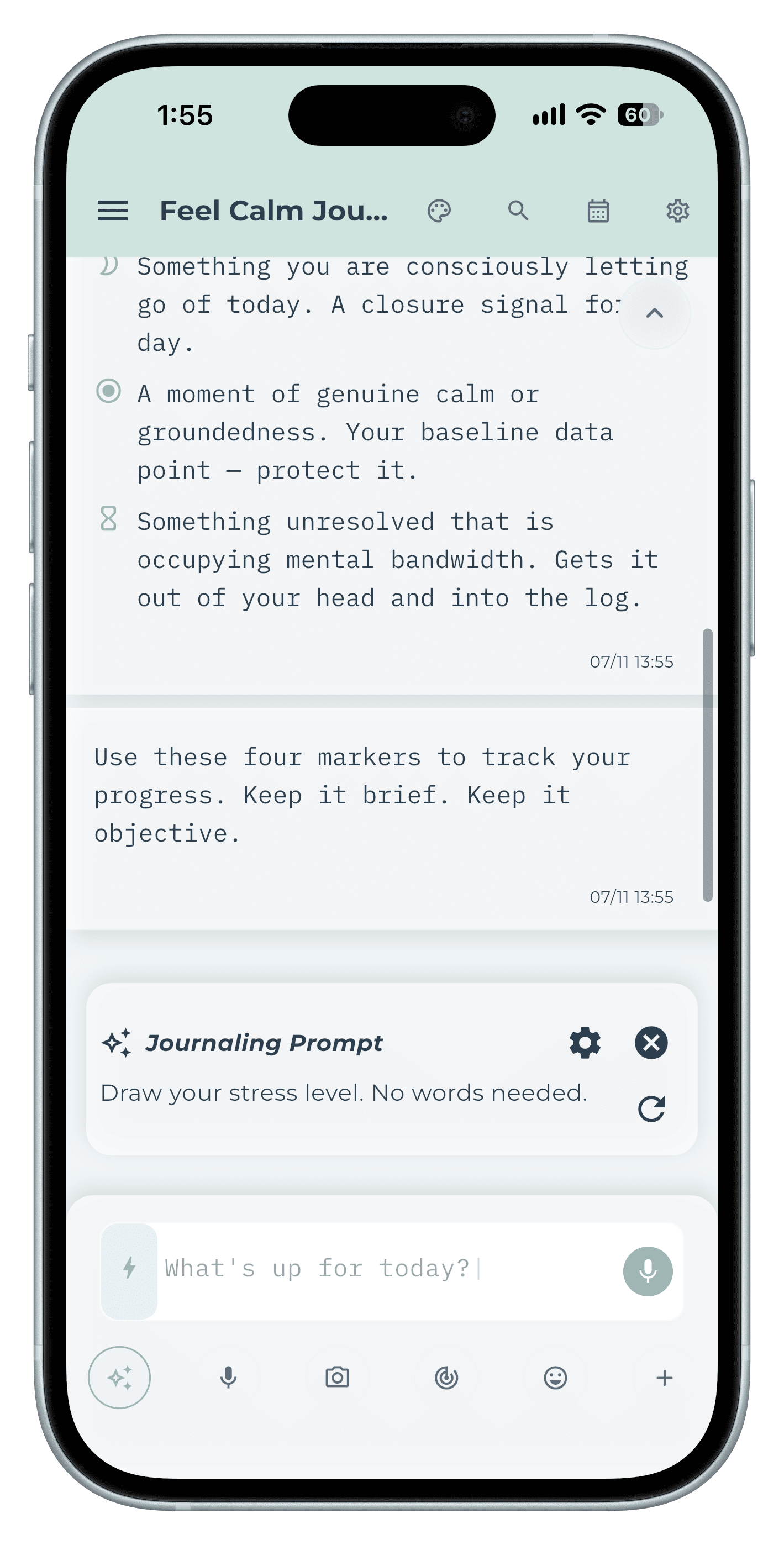
Step 1 A sticker when words are too much
Some days, one sticker is the entry.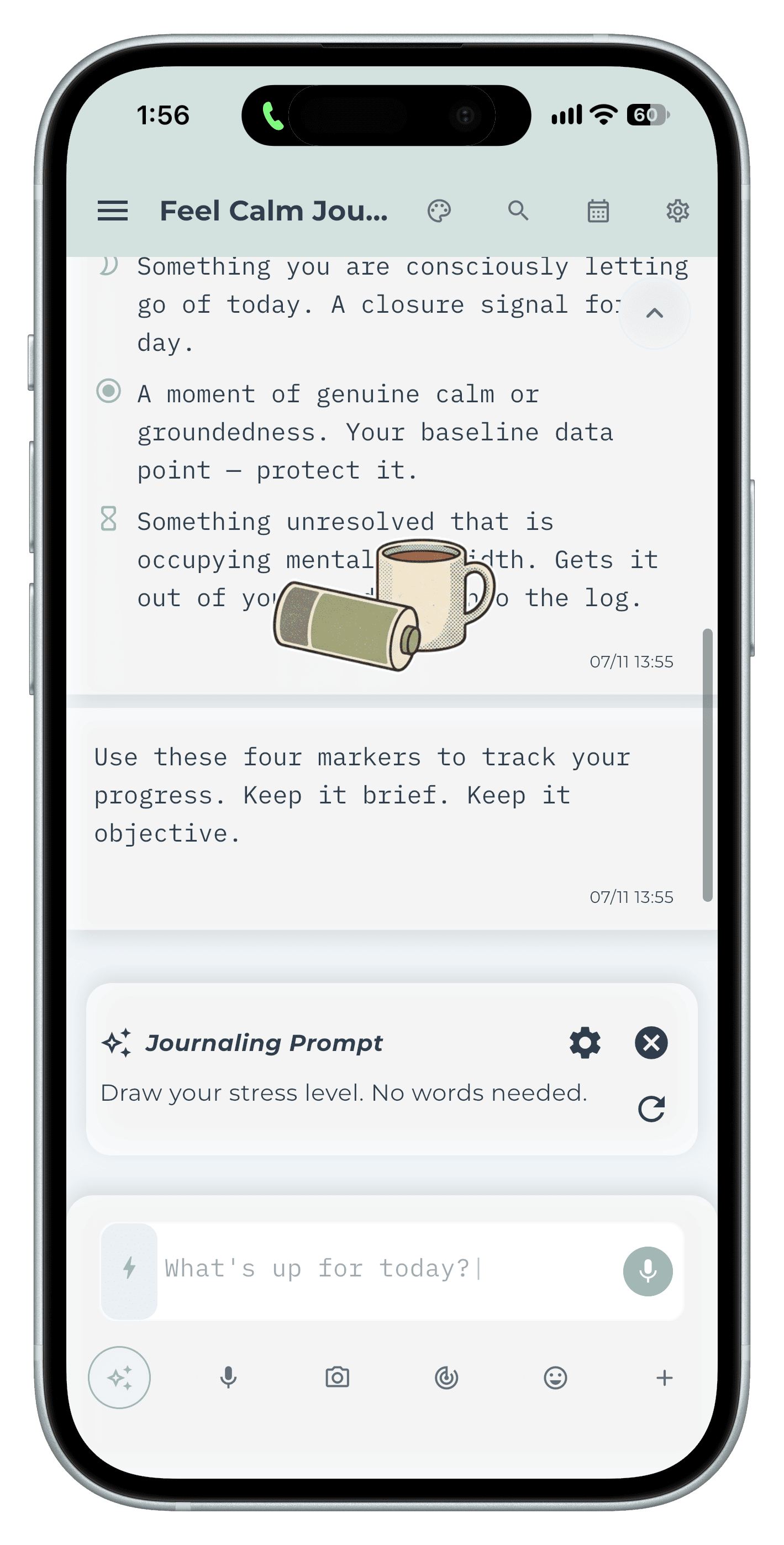
Step 2 Keep it private
Lock the diary with its own PIN.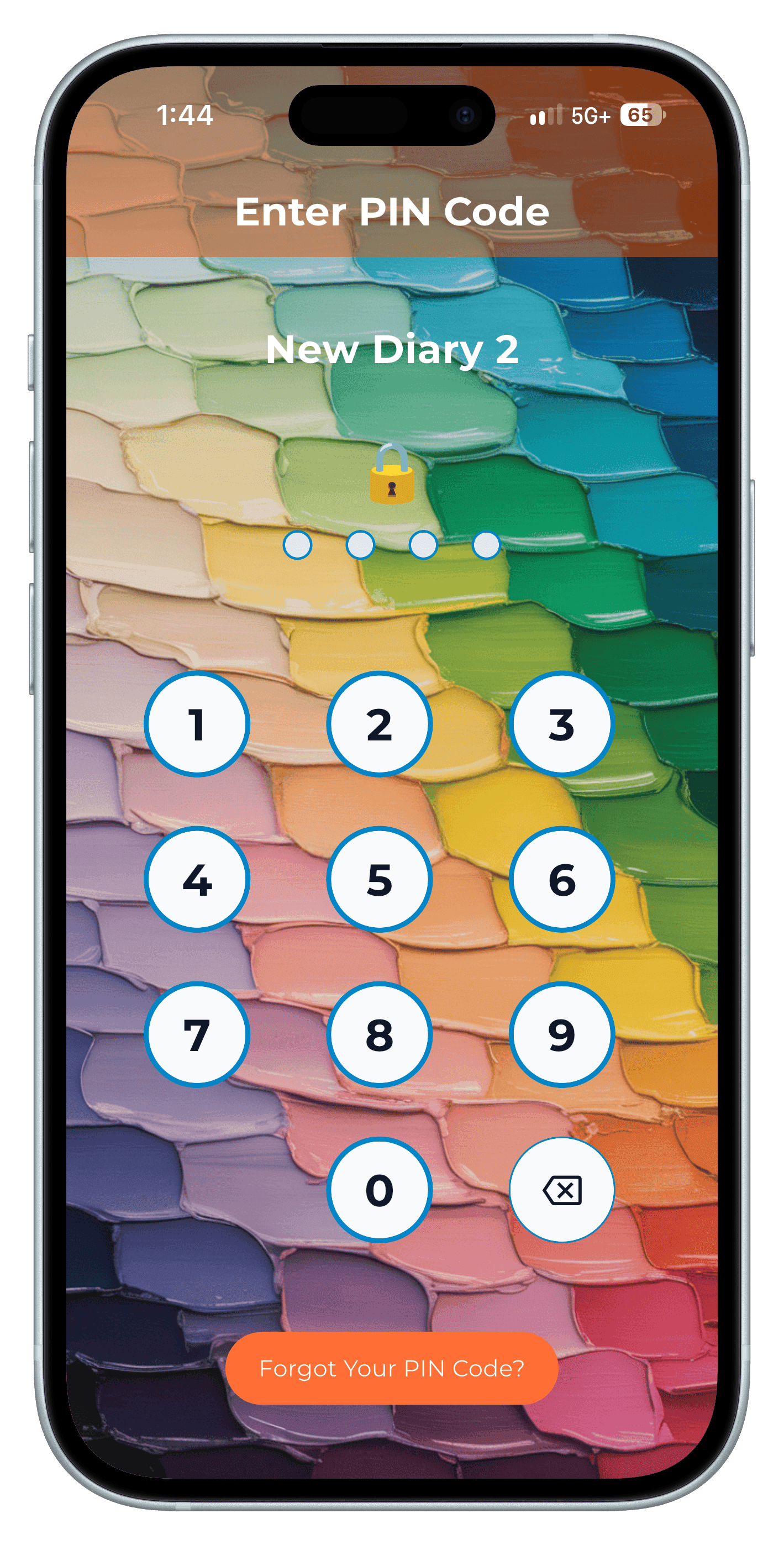
Step 3
Step-by-step in the app
The full walkthrough, with every screen, is in our how-to.
Frequently asked questions
Can journaling help with anxiety?
For many people, writing about worries and naming feelings helps them feel calmer. It supports wellbeing but doesn't replace professional help — if anxiety is affecting daily life, talk to a doctor or counsellor.
What should I write when I feel anxious?
Name the feeling, write the worry as it is, then one thing in your control and one thing that's okay right now.
Sources
- Pennebaker, J. W. (1997). Writing about emotional experiences as a therapeutic process. Psychological Science, 8(3), 162–166.
- Lieberman, M. D., et al. (2007). Putting feelings into words: Affect labeling disrupts amygdala activity in response to affective stimuli. Psychological Science, 18(5), 421–428.