By Manuj Mehta · Updated
“Every few weeks I crash and I never see it coming. I want to know what's behind it.”
To track your mood usefully, rate it once a day at the same time, add one line on what affected it — sleep, people, work — and review weekly. The rating shows the trend; the line shows the cause. Patterns usually appear within a few weeks.
Why it happens
Memory is a poor record of mood: we remember peaks and recent days, not averages. A daily log replaces “it's been a bad month” with what actually happened — often a handful of bad days that share a cause, like short sleep or a particular kind of week.
The rating-plus-one-line method
- Same time daily. Evening works for most people.
- Rate it simply. A 1–5 scale or five colours.
- One line of why. “Slept 5 hours” beats a colour alone.
- Review weekly. Look at the worst days first: what came before them?
This works on paper or in any app. Read the full method in Types of journaling.
Doing it in Penso Notes
Trackers and Analytics are part of Penso Pro. A one-line mood diary works on the free plan. What's in Pro
Set up a Mood tracker
Trackers has a Mood Tracking category — pick it, set a reminder.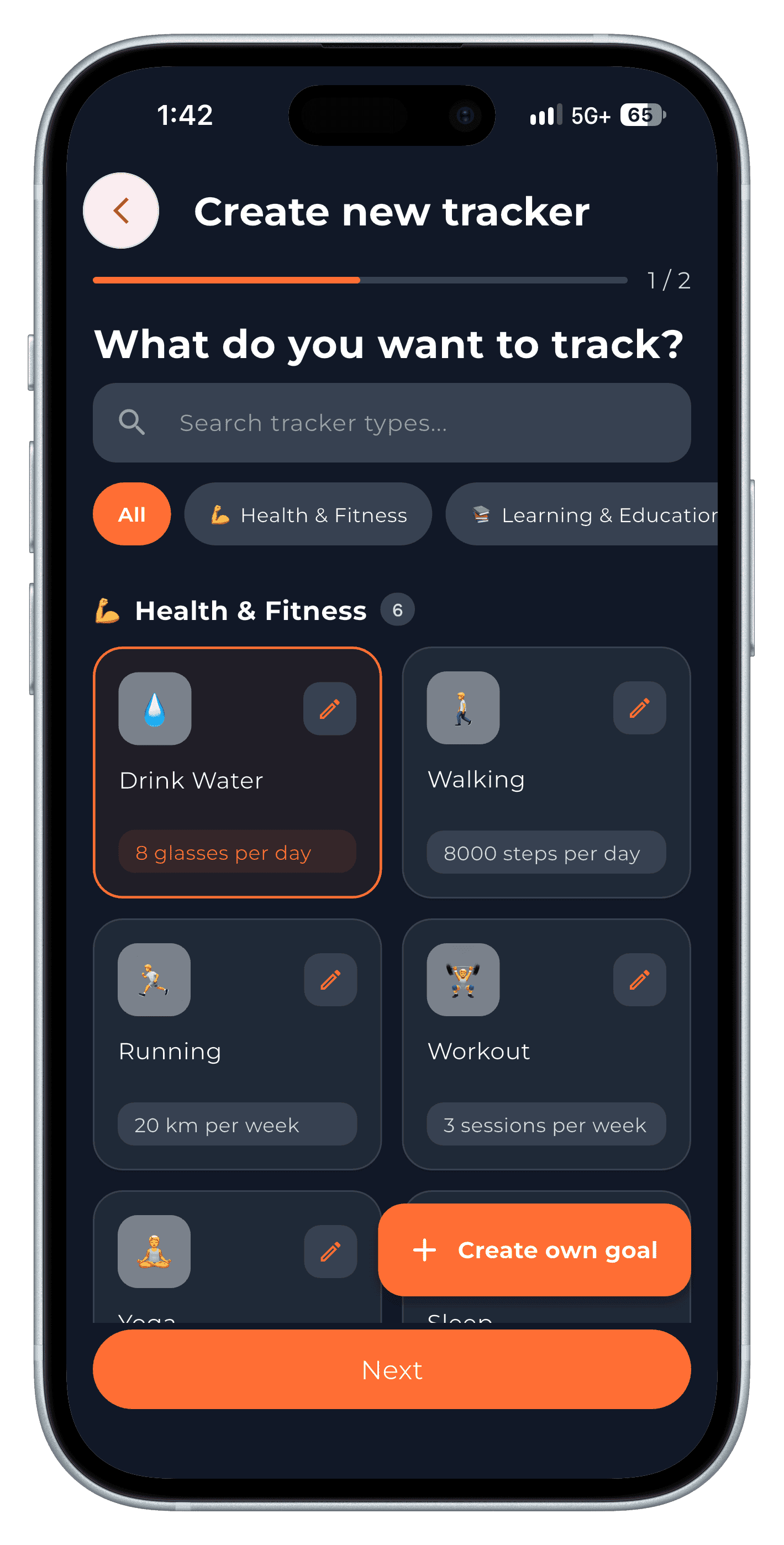
Step 1 Log it from your diary
One tap on the tracker card, one line in the diary for the why.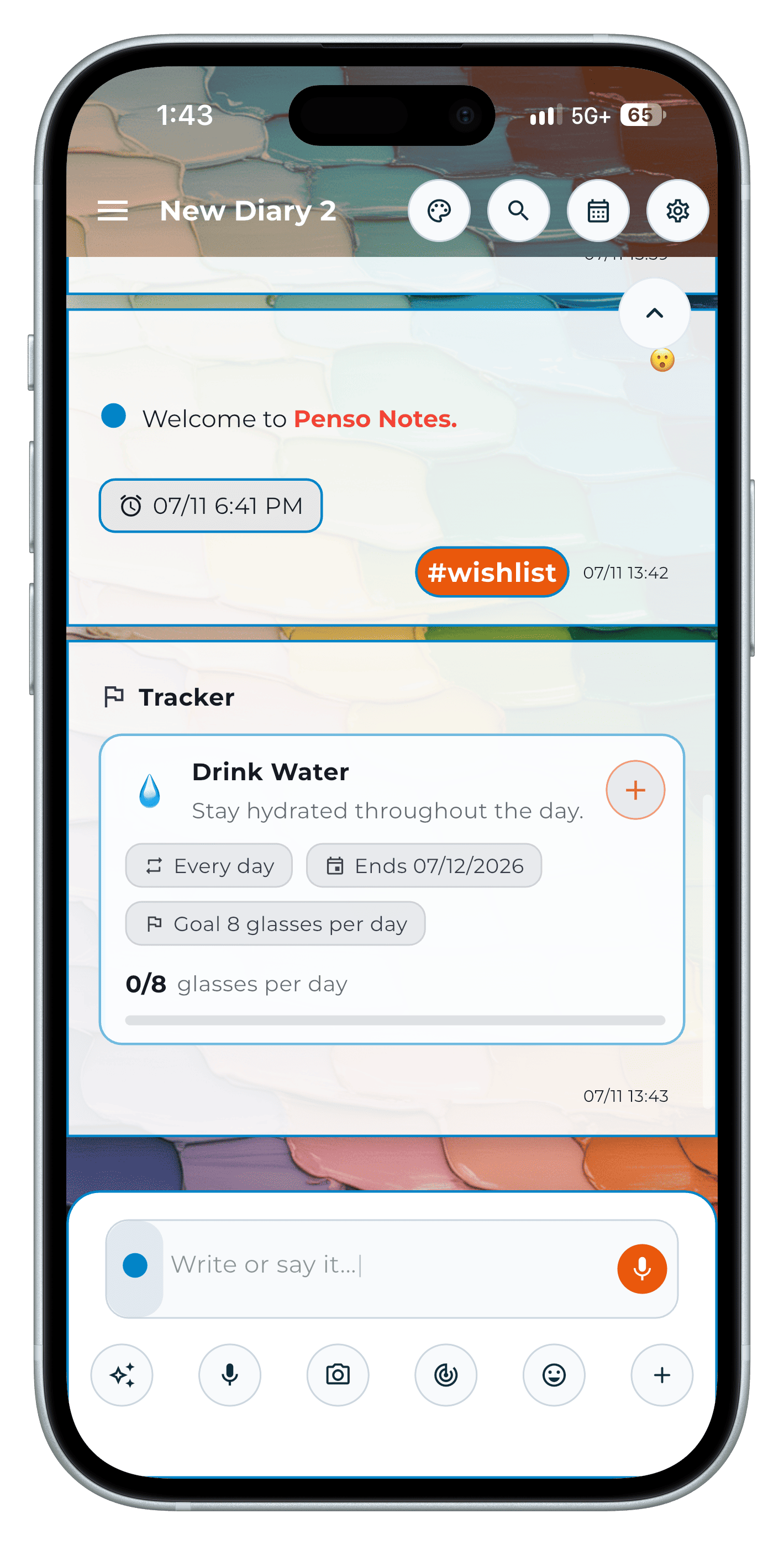
Step 2 See the patterns
Analytics shows streaks, active days and progress over 7, 30 or 90 days.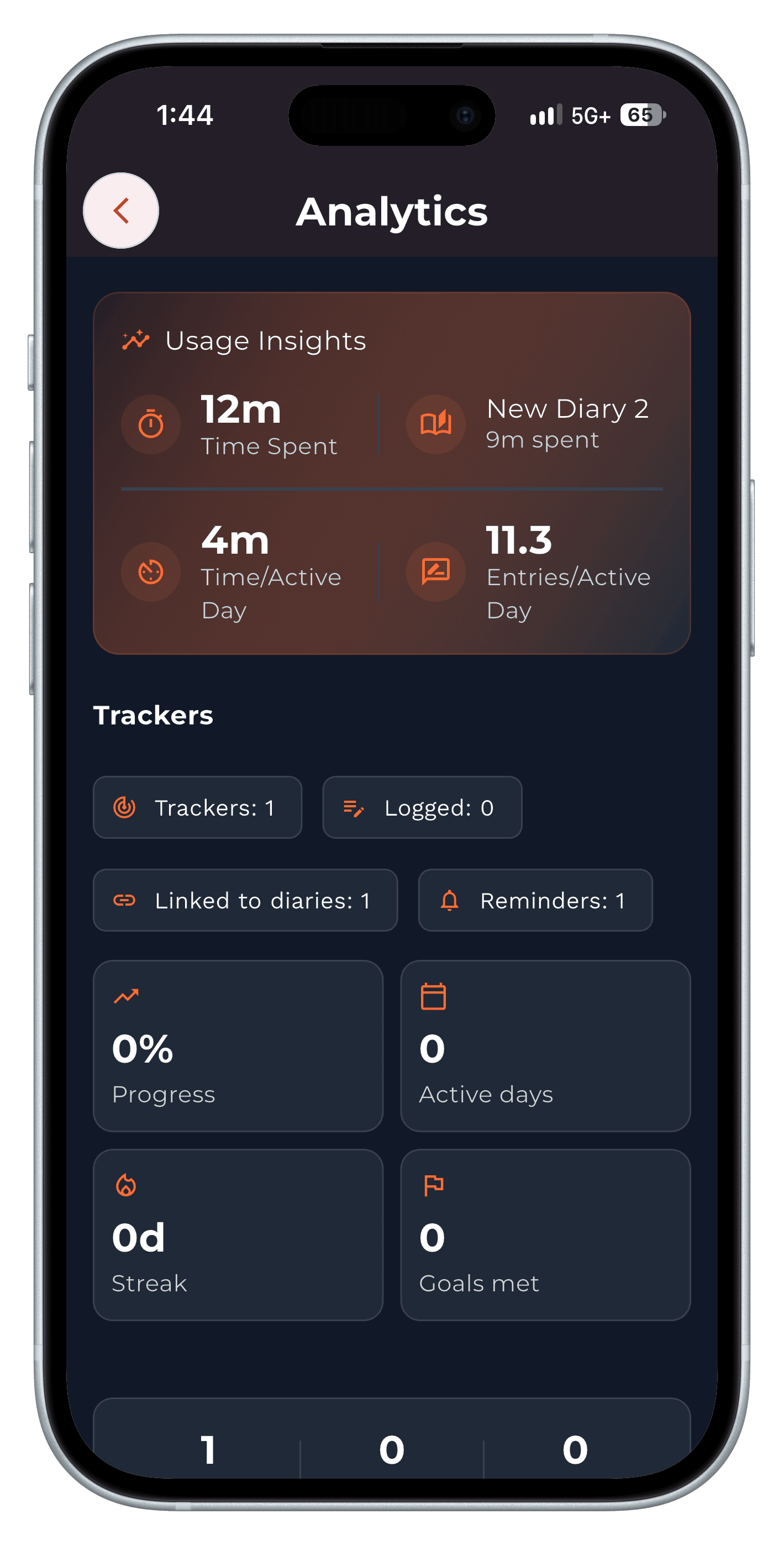
Step 3
Step-by-step in the app
The full walkthrough, with every screen, is in our how-to.
Frequently asked questions
How often should I track my mood?
Once a day, at the same time. More often adds noise; less often misses patterns.
What's the best way to track mood?
A simple daily rating plus one line about what affected it, reviewed weekly.